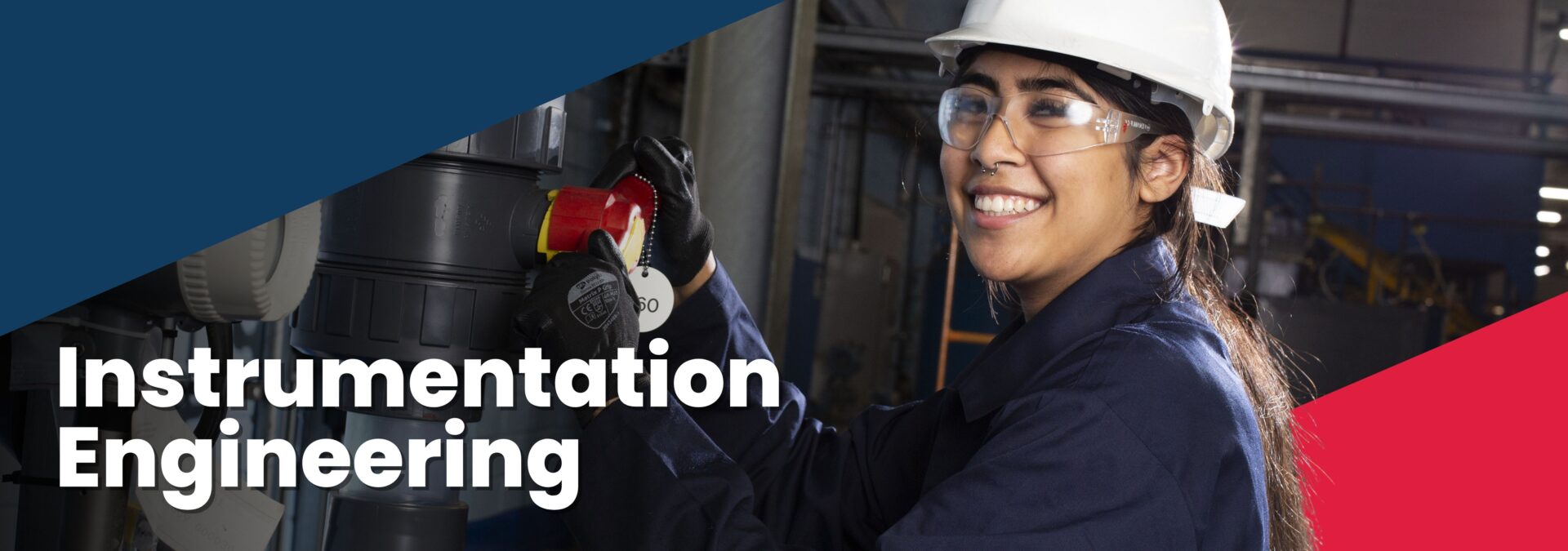
Instrumentation engineering is essential across industries such as manufacturing, energy, healthcare, and transport. Engineers in this field design and maintain the systems that measure and control key factors like pressure and temperature.
As automation and digital technology advance, the demand for skilled instrumentation professionals continues to grow, making high‑quality training more important than ever.
We offer hands-on instrumentation engineering programmes designed to meet this demand. Our courses provide real-world practical and theoretical skills, covering electrical safety, hand tools, AC/DC systems, cable types, instrument drawings, loop sheets and PLCs.
Understanding your study programme
Main study programme
Our courses cater for a wide range of specialist sectors in the engineering industry, and support your progressions into an apprenticeship, employment or higher education.
Practical skills in the workplace
Develop skills to support your future employment, focusing on English, maths and science, work experience/placement, and gaining industry behaviours.
Thrive personal development
Take part in sessions to develop your soft skills, including team building, first aid, interview skills, communication and digital skills, and take part in enrichment activities.
Instrumentation Engineering Courses
Diploma in Instrumentation and Control Engineering – Level 3
Instrumentation
School Leaver
|
2 years
Pearson
|
Age Group(16-18)
Instrument for Non Instrument Personnel
Instrumentation
Adult Learner
|
3 days
TTE
|
Age Group(19+)
Progressing onto an apprenticeship
If you’re interested in pursing an apprenticeship, we strongly recommend also applying for a full-time study programme in your chosen specialism.
Throughout the year, when an employer requests an intake of apprentices, we open these opportunities up to our full-time students. If successful, students can seamlessly transfer onto the apprenticeship pathway and continue their qualification with us on a day-release basis. This route allows students to continue their studies while gaining valuable hands-on experience with their new employer.
Where your course can lead
Who we work with